Toyota Plant Finds Paint Defects in Hours, Not Weeks
Quick Summary
Toyota Industries' Nagakusa Plant in Japan pulled data from hundreds of paint-shop sensors into one system and used machine learning to find which of nearly 400 variables actually cause defects. Root-cause analysis that took five days now takes under four hours, and seeding defects fell 25%.
The Use Case
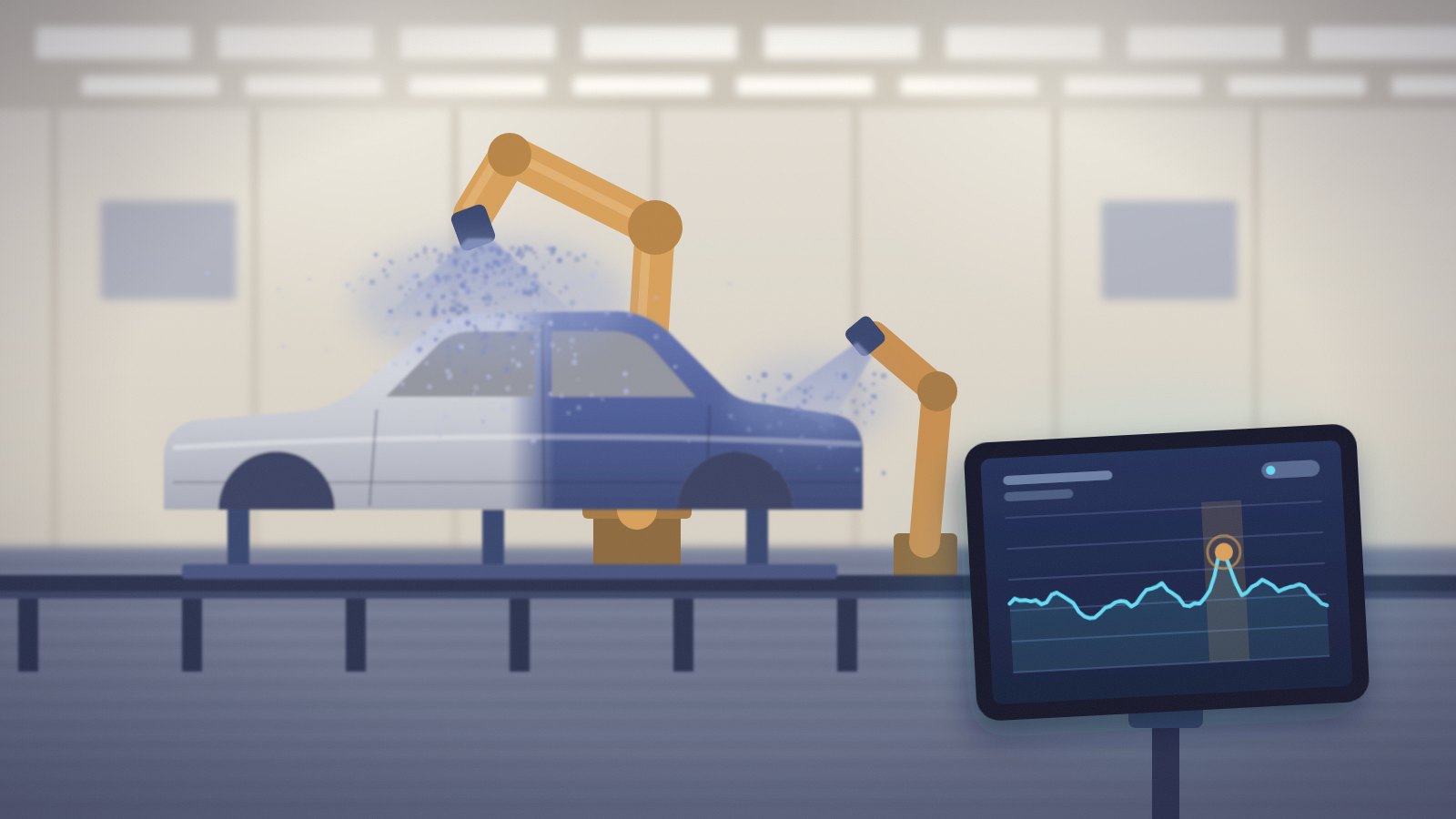
Paint defect data lived in separate systems across hundreds of sensors, so finding the cause of a defect spike took weeks of specialist engineering time. Inspection depended on a shrinking group of veteran paint specialists judging defects by eye. Working with Microsoft and Sight Machine, the plant streamed factory data into Azure, built a shared data layer with context on top of it, and let a model narrow nearly 400 variables to the handful most correlated with defects. Manufacturing, engineering and production teams now look at the same dashboards, which changed how quickly they agree on a countermeasure.
Real Example
- Sensor readings from booth temperature, humidity, line speed and paint flow stream into Azure IoT Hub
- Sight Machine assembles them into a single record per vehicle with production context
- The model scores nearly 400 variables against defect outcomes and surfaces the top few
- A defect spike shows up on the dashboard mid-shift, with the likely cause already ranked
- The paint production leader reviews it with engineering in the same view, in the same meeting
- A countermeasure is applied the same day instead of after a week of analysis
Why It Matters
- Root-cause analysis dropped from 5 days to under 4 hours, sometimes under 1
- 25% reduction in seeding-related defects during the pilot
- 80% less time preparing daily standups, and 4x more chances to resolve defects
Source
https://www.microsoft.com/en/customers/story/26367-toyota-industries-corporation-azure